

As of June 30, 2026, the CIRAS Institute—Association for the Promotion of Interdisciplinary Research and Applied Science—has been officially registered as an association under Austrian law. The institute received official confirmation of its registration last week. The new research institute is headquartered in Vienna; it forms the scientific pillar of the CIRAS architecture (Council for Interdisciplinary Research and Applied Science). The institute is launching with a clear mission: to consistently address research questions in an interdisciplinary manner rather than within separate disciplines.
Incidentally, if you flip through the calendar, you’ll find some remarkable coincidences surrounding the founding date, June 30: In 1894, Tower Bridge opened in London—to this day a symbol of how to permanently connect two banks. In 1905, on this very day, Albert Einstein submitted his paper on the special theory of relativity to the Annalen der Physik. And in 1908, the Tunguska event—which remains unexplained to this day—occurred in Siberia—a case that demonstrates just how many questions science still leaves unanswered even a century later. Whether coincidence or not: it is a fitting date for an institute that has dedicated itself precisely to this openness to unresolved questions.Current institutional structures are not optimized for this level of complexity. Universities, research institutes, industries, and governments operate largely within defined boundaries. While this specialization has produced significant advances, it has also created fragmentation, limiting the ability to translate knowledge into coordinated, large-scale impact.
One Topic, Multiple Centers: The Approach
What matters here is not so much the number of centers as the principle by which they collaborate. Whereas research questions are typically addressed within a single academic discipline, every project at the CIRAS Institute begins with a different question: Which fields of study does this topic actually touch upon—and who, therefore, needs to be at the table?
A question in the field of health, for example, can rarely be answered solely from a medical perspective; depending on the case, environmental factors, holistic approaches, social conditions, or infrastructural requirements may be just as relevant. Accordingly, the relevant centers are brought together to address the topic collaboratively, rather than each examining a separate aspect in isolation. This approach builds on established traditions in systems and sustainability research, such as those underlying the One Health approach.
Collaboration beyond the institute’s boundaries is explicitly encouraged: According to its bylaws, the CIRAS Institute may establish scientific working groups and advisory boards, as well as cooperate with universities, universities of applied sciences, research institutions, foundations, NGOs, and expert partners. This allows external researchers to be involved in projects from the very beginning—including those from disciplines not represented within the institute itself.
A Voice from the Founding
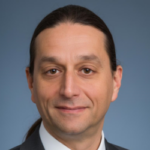
“Modern global challenges can no longer be solved within isolated academic disciplines,” explains Thorsten Schmitt, President of the CIRAS Institute, on the occasion of the institute’s founding. “A complex issue rarely has just one disciplinary dimension. Anyone who views it from a single perspective inevitably gets an incomplete picture—and thus often an incomplete solution as well.
That is why, for every project, we first ask which fields are actually involved and bring them together: from our own centers as well as from outside.”
“Just as Tower Bridge connects two banks, we want to link scientific excellence with societal practice—and in doing so, take a close look precisely where questions remain unanswered. We are committed to robust, verifiable findings.”
The newly elected executive team—President Thorsten Schmitt, Secretary General Katarzyna Jelenska, and Treasurer Lothar Hartmann—has been appointed for its first term and has set an ambitious agenda for building the institute.


